Find your child’s class.
Pick an age. See every WTC class that fits. We have students as young as eight weeks old and as old as eighteen, and a real program for every age in between.
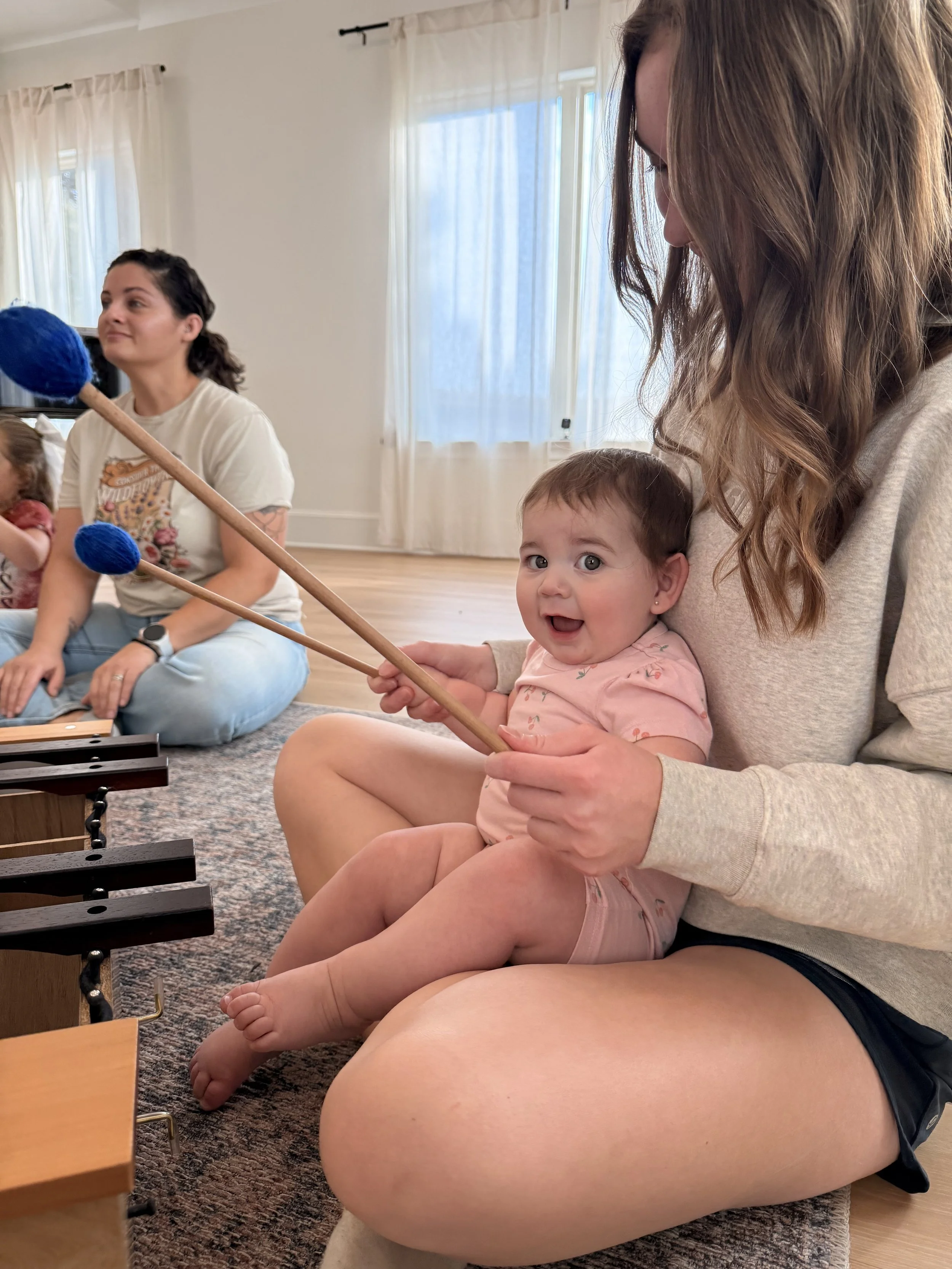
Ages 0–3
The earliest years matter more than people realize. WTC’s youngest classes don’t push academic music or dance. They build the listening, focus, and parent-child rhythm that make every later step easier.
Baby Class (0–3, Suzuki Early Childhood)
A weekly parent-and-child music class. Songs, movement, rhythm, and quiet listening, with parents participating in everything. The foundation before formal lessons.
→ Learn More
Creative Movement (age 3 only, ballet)
A 3-year-old’s first taste of ballet. Music, imaginative play, and age-appropriate movement that build the foundations every dancer needs.
→ Learn More
Private Violin & Cello (3+)
Private string lessons can begin at age 3 if your child is ready. Start with a free consultation.
→ Learn More
Ages 4–6
This is the busiest age at WTC, and not by accident. Children this age are ready for real music, real ballet, and the structure of regular lessons. Most of our families start their child here, and many continue with us for years.
Pre-Ballet (4–5)
The step between play and formal training. Students start learning what ballet actually asks of a dancer.
→ Learn More
Primary 1 Ballet (5–6)
The first year of structured Cecchetti training. Where ballet stops being introductory and starts being an education.
→ Learn More
Private Violin & Cello (3+)
Weekly one-on-one Suzuki lessons paired with monthly group classes.
→ Learn More
Private Piano (5+)
Weekly Suzuki piano lessons. Same private + group structure as strings.
→ Learn More
General Music (5–7, younger group)
Weekly Orff-inspired group class: singing, movement, rhythm, and playing simple instruments together. Daytime; homeschool-friendly.
→ Learn More
Visual Art (5–8, younger group)
Weekly Montessori-informed art class with real materials and real time to make something. Two daytime slots on Tuesday mornings.
→ Learn More

Progress Rooted in Principle
We begin every engagement by listening, ensuring that objectives align with broader civic, environmental, and fiscal contexts.
Analytical models then quantify potential scenarios, allowing decision makers to compare paths with clarity.