Classical ballet training in the Cecchetti method, with formal affiliation to the Cecchetti Council of America and optional graded examinations. A real ballet education, in Midland, from age 3 through advanced technique.
We teach the Cecchetti method.
Cecchetti is one of the major classical ballet training systems, developed in the late 1800s by Enrico Cecchetti, the same teacher who trained Anna Pavlova, Vaslav Nijinsky, and the founders of the Royal Ballet and Ballet Rambert. Today it's maintained by the Cecchetti Council of America, and WTC is a formally affiliated school. Every class follows the Cecchetti syllabus, and advanced students have the option to take the Council's official graded examinations.
The five principles every Cecchetti class trains:
Strength. Ballet is athletic before it's beautiful. Students build the strength to sustain technique safely, at the barre, in pirouettes, and eventually on pointe.
Elasticity. Flexibility without rigidity. Pliability at every level.
Musicality. Cecchetti dancers don't just move to music. They move with it. The method builds a dancer's ear alongside their body.
Mastery, not memorization. Students don't copy combinations by rote. They learn the building blocks of each technique and understand what they're doing and why.
Artistry. Ballet dancers are artists, not mechanical technicians. Cecchetti training ends with expression, not drill.
Why the methodology matters. Many studios call their training "classical ballet." Very few teach a named, accredited methodology. Cecchetti is that methodology, and WTC is a formally affiliated school.
The tradition. Every WTC ballet class ends the same way, with a Grande Reverence, a traditional curtsy or bow to the teacher and pianist. It's a small thing that signals a much larger one: this is ballet as a discipline, a lineage, and a craft.
A clear path from age 3 to advanced technique.
Every WTC program is built on a proven pedagogical method, not a curriculum we made up.
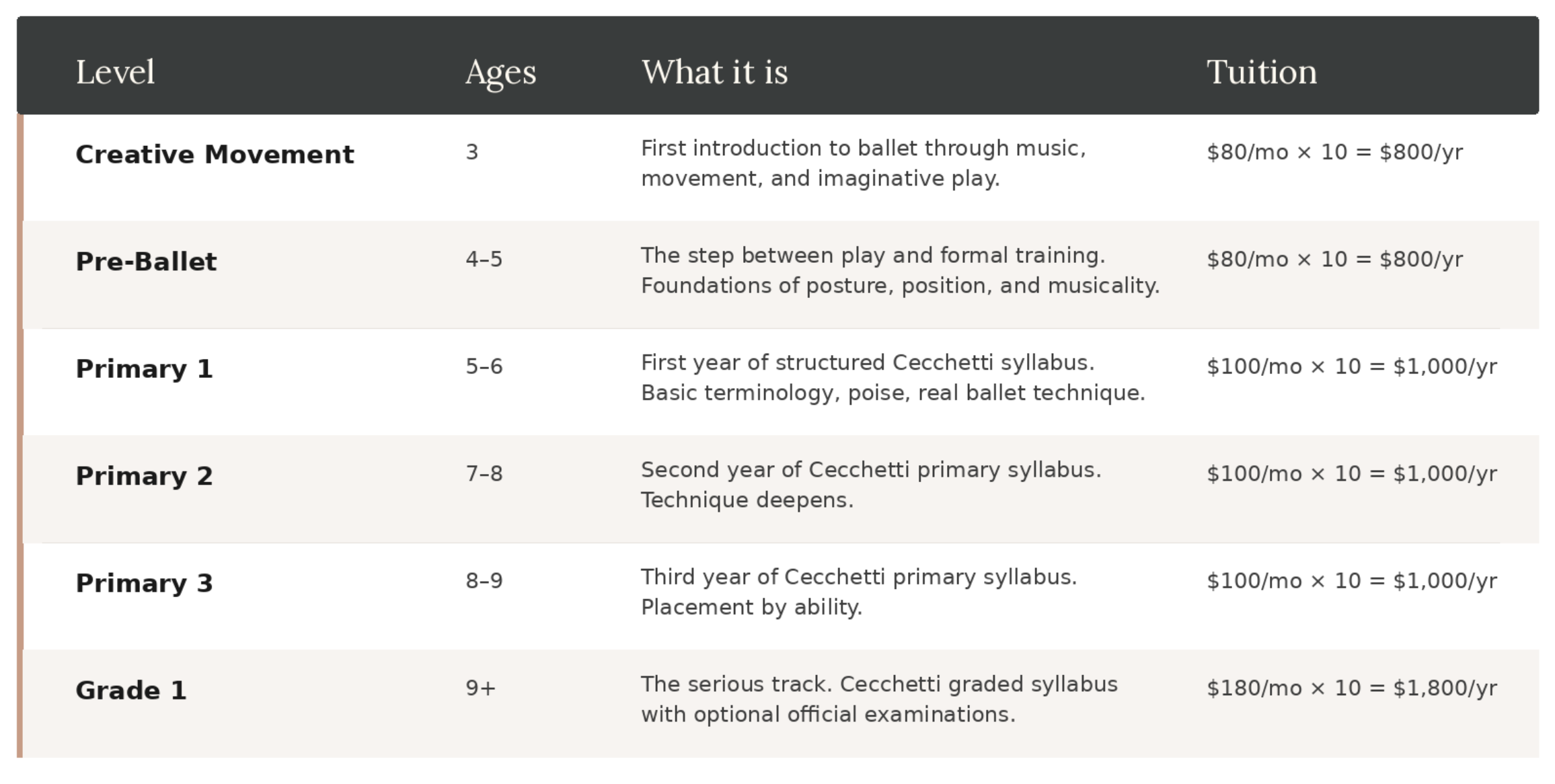
All levels: $100 annual registration fee.
A note on age 5: Pre-Ballet and Primary 1 both accept 5-year-olds. Which class is right depends on the child, not the birthday. Placement is by teacher assessment during your trial class.
One recital a year. Parent observation days throughout. We keep performance limited on purpose. Class time is for technique, not choreography rehearsals.
Creative Movement (Age 3)
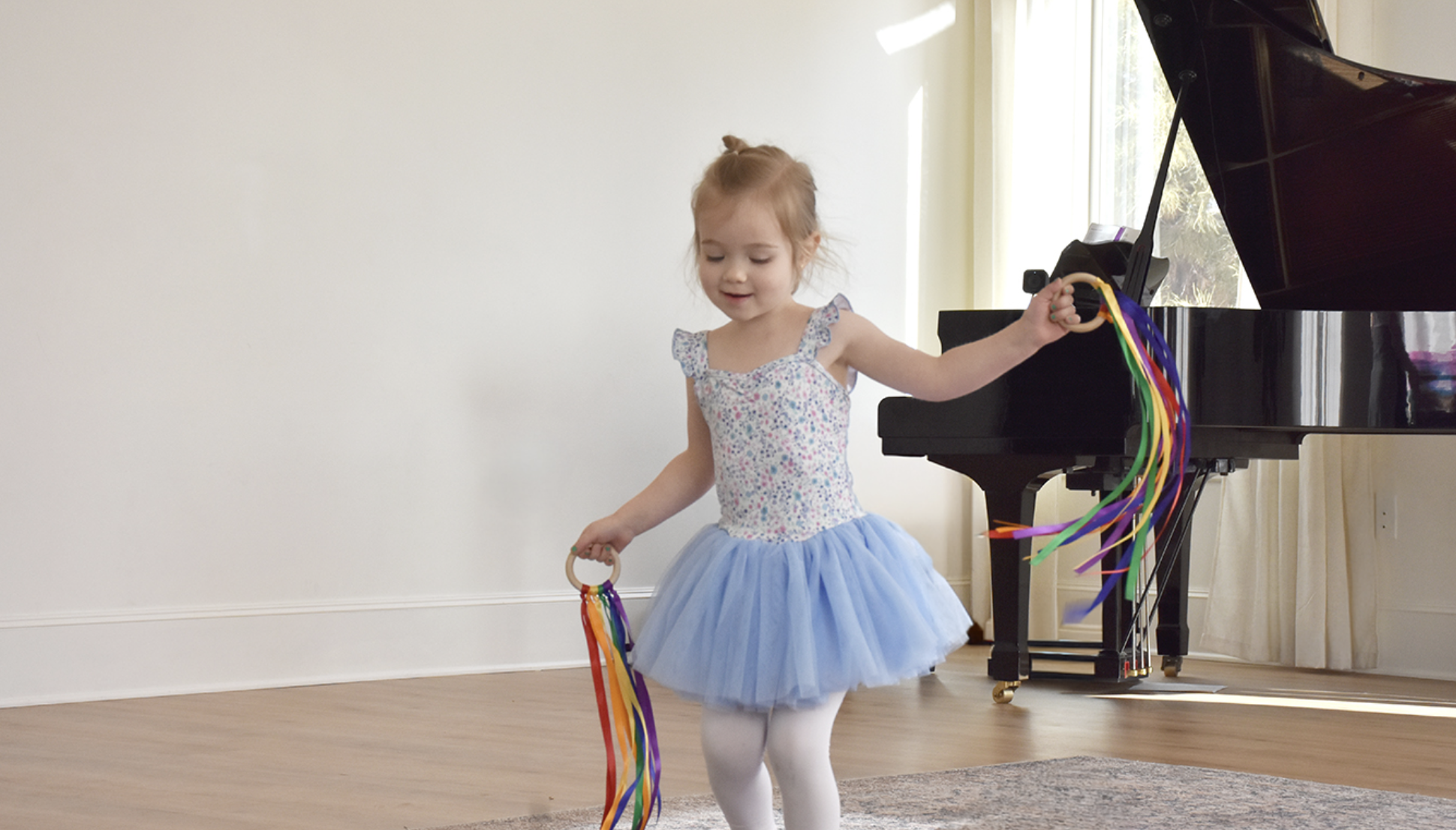
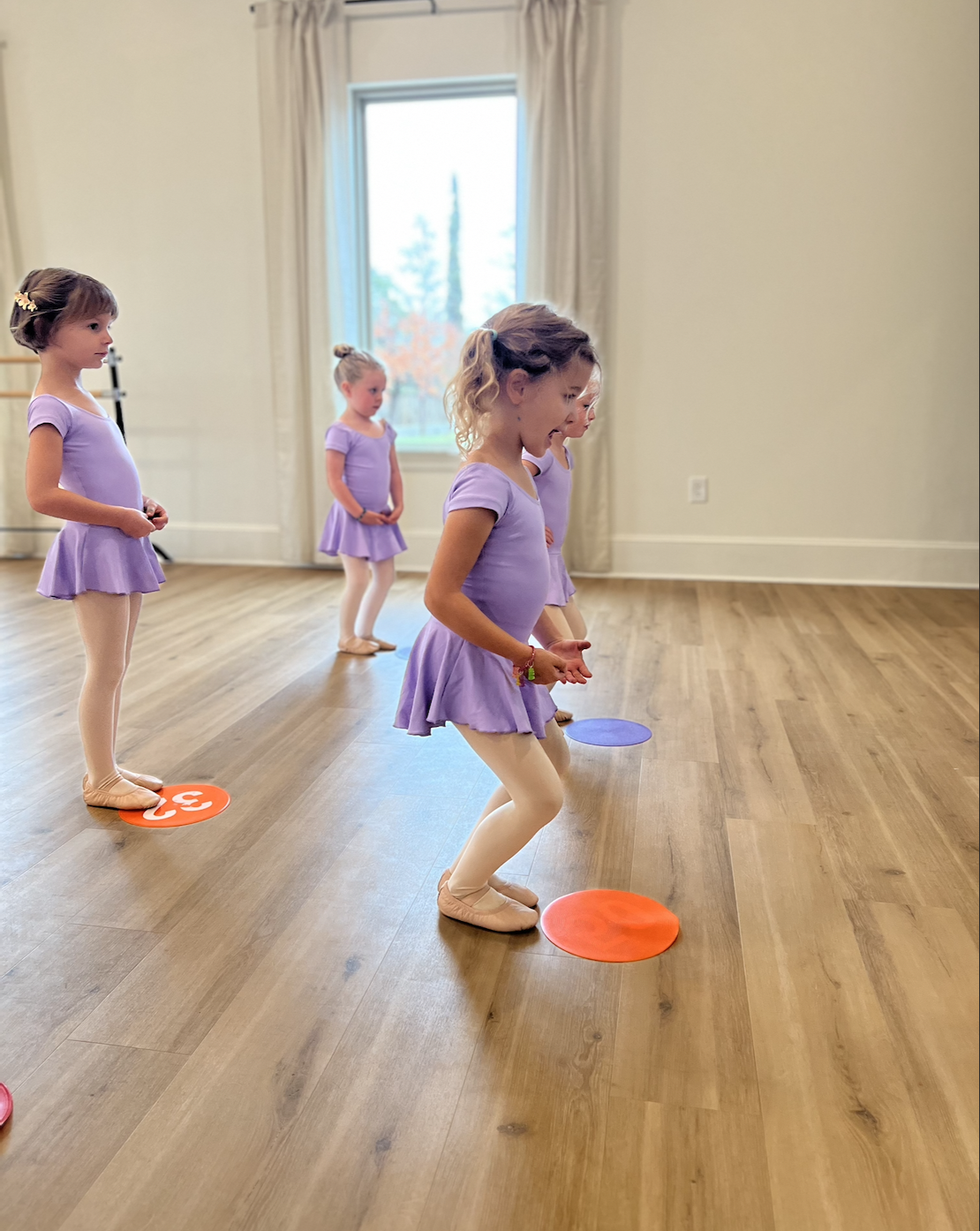
A 3-year-old's first taste of ballet. Classes use music, imaginative play, and age-appropriate movement to build the foundations every dancer needs: rhythm, coordination, focus, and the ability to follow a teacher in a structured space. Students develop motor skills and confidence alongside a genuine curiosity about dance.
This is where ballet starts being fun. The real technique comes next year.
The details:
45-minute weekly classes
Ages 3 only
$800/year, paid as $80/month × 10 months
$100 annual registration fee
One recital per year and multiple parent observation days throughout the year
Every class ends with the Grande Reverence
Pre-Ballet (Ages 4–5)
The step between play and formal training. Pre-Ballet students start learning what ballet actually asks of a dancer: how to stand, how to hold their arms, how to move with the music instead of alongside it. Classes are still playful, still developmentally appropriate, but the language of ballet starts to appear: first positions, basic terminology, the beginnings of posture.
By the end of the year, most students are ready for Primary 1.
The details:
45-minute weekly classes
Ages 4–5
$800/year, paid as $80/month × 10 months
$100 annual registration fee
One recital per year and multiple parent observation days throughout the year
Every class ends with the Grande Reverence
Primary 1 (Ages 5–6)
The first year of structured Cecchetti training. Students begin working through the Cecchetti Council's pre-syllabus material, building poise, musicality, and real ballet vocabulary. The class is longer than Pre-Ballet, and the expectations are higher: students are learning positions and steps they'll use for the rest of their training.
Primary 1 is where ballet stops being introductory and starts being an education.
The details:
60-minute weekly classes
Ages 5–6
$1,000/year, paid as $100/month × 10 months
$100 annual registration fee
One recital per year and multiple parent observation days throughout the year
Every class ends with the Grande Reverence
Meet our faculty.
Our ballet teachers are Cecchetti-certified and have danced with professional ballet companies. That combination matters. A teacher with company experience knows what a trained body can actually do, what the standards are at the top, what real classical repertoire demands. A teacher with formal Cecchetti certification knows how to build that body in a child, year over year, without shortcuts. Most ballet teachers in the region have neither. Ours have both.
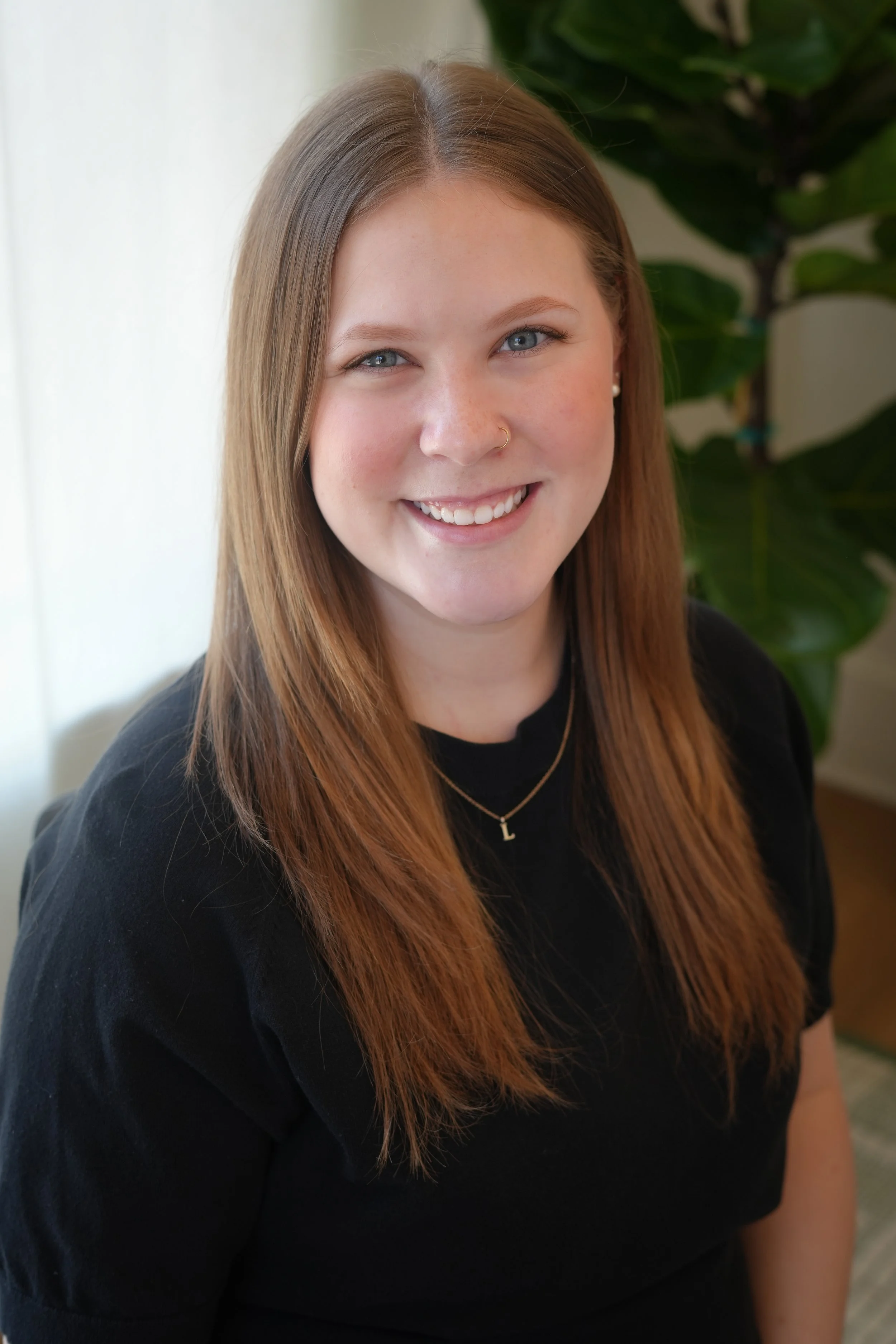
Cheyanne Flores
About tuition.
Serious training costs what it costs, and our teachers are worth what they're paid. Dance tuition at WTC ranges from $800 a year for Creative Movement to $1,800 a year for Grade 1, paid in monthly installments. Plus a $100 annual registration fee.
We don't believe cost should decide which children get to become dancers. WTC offers need-based scholarships and bursaries for families where tuition is the barrier, not the choice. Every serious applicant is considered.
Ready to start?
I know what I want, let's enroll.
I want to try a class first.
I still have questions.
Your child's first art class is free. Come, watch, participate, see if it's a fit.